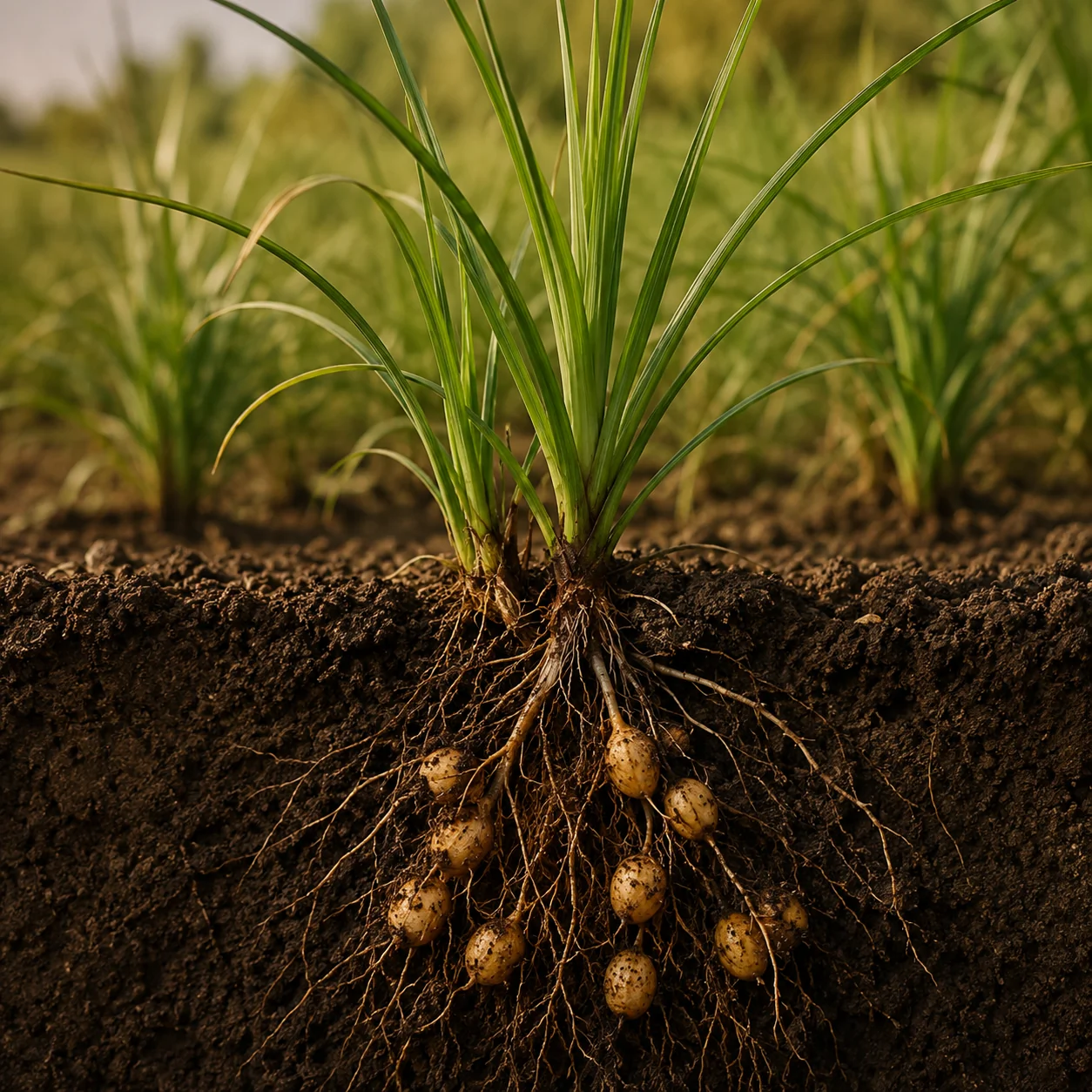
What Is It?
The tiger nut is not a true nut, but a root vegetable (tuber) of the plant Cyperus esculentus.
It is also commonly known as yellow nutsedge, chufa, or earth almond.
The tubers are naturally sweet and crunchy with an almond-like taste.
As tiger nuts are not true nuts, they are suitable for those with nut allergies, and they are also suitable for vegans and vegetarians.
How To Prepare
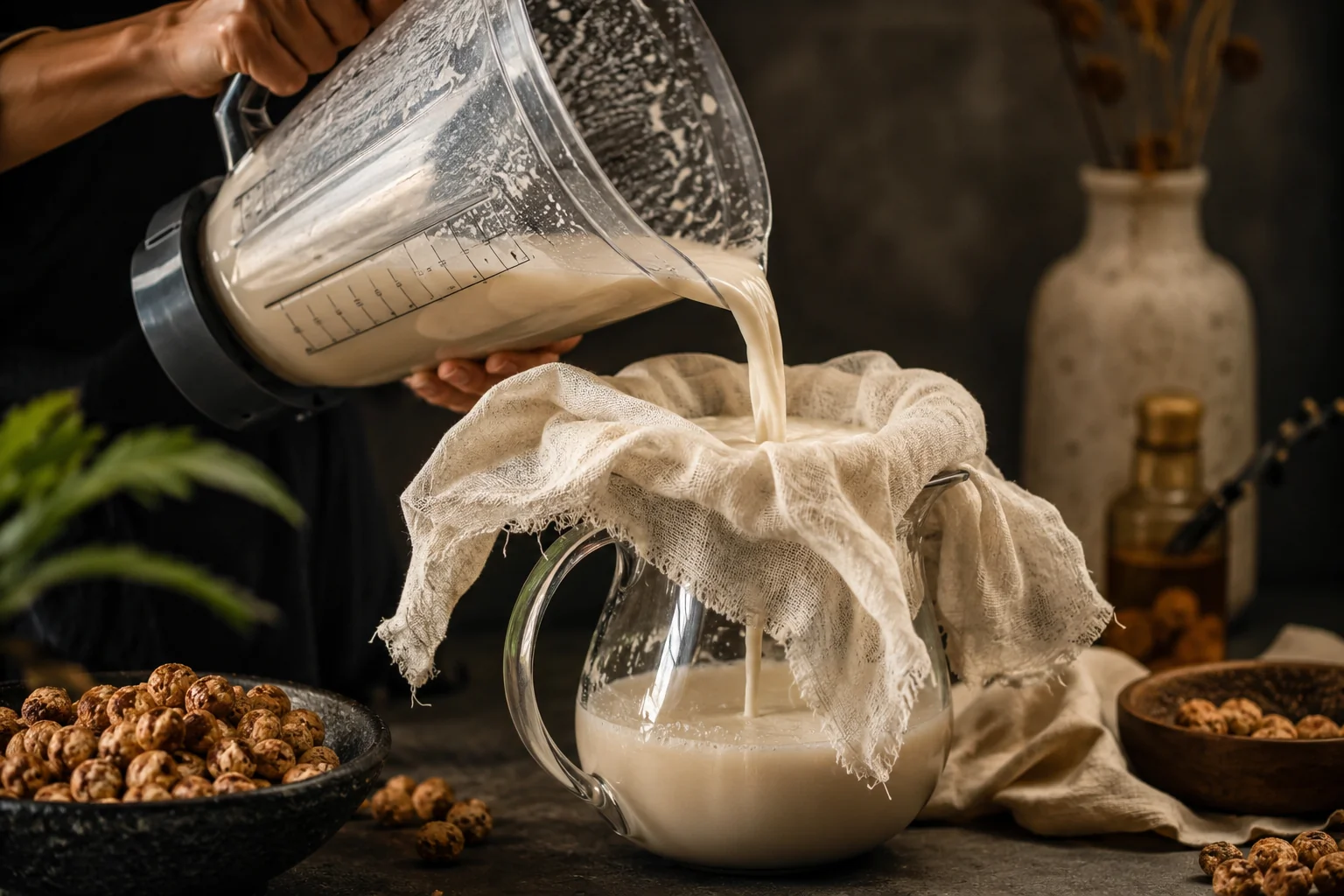
Tiger nuts can be soaked and blended to make a delicious and nourishing plant-based drink, variously known as Kunu Aya or Horchata de Chufa.
Soak the nuts in water for 24 to 48 hours.
Place in a blender and add water so the nuts are just submerged. Add a few cloves for natural preservative.
For a naturally sweeter version, stoned (pitted) dates can be blended in, adding flavour along with small amounts of fibre, minerals and natural sugars.
Strain the blended nuts through a muslin cloth and serve.
How To Serve
Tiger nut milk is naturally sweet, creamy, and nutty, so it works well both as a drink and as an ingredient.
Traditional Spanish horchata-style tiger nut milk is served over ice and sprinkled with ground cinammon or served with a cinammon stick.
The milk also works well as an ingredient in smoothies, with breakfast cereals and oats, and as a dairy substitute in desserts.
Blend the milk with fruit and your choice of protein or plant-based powder for a recovery smoothie after exercise.
Tiger nuts have been shown to be rich in proteins, carbohydrates, fibre, fats, vitamins, minerals and bioactive compounds.
They contain natural antioxidant compounds that may help protect the body’s cells from oxidative stress caused by free radicals. Learn more here:
Cholesterol, Free Radicals and Oxidation
Tiger nut milk contains natural plant fibres and compounds that may help support beneficial gut bacteria.
Tiger nuts contain plant sterols, which may help lower blood cholesterol levels as part of an overall balanced diet.
Plant sterols, and how they lower cholesterol
Micelles and lipoproteins are both fat transport structures, but they work in different areas of the body and for different jobs.
Micelles help carry cholesterol through the watery environment of the small intestine so that it can reach the intestinal wall and be absorbed.
Large lipoproteins made in the intestines named chylomicrons then carry dietary fat, including cholesterol, away from the gut.
Chylomicrons first enter lymph vessels called lacteals in the intestine, then pass through the lymph system before entering the bloodstream near the upper chest.
After delivering much of their fat to body tissues, the chylomicron remnants, including cholesterol, are then taken up and processed by the liver.
The liver needs cholesterol for important jobs, especially for producing bile acids that help break down fats.
As they are similar in structure, plant sterols and cholesterol compete for space in micelles.
When there are more plant sterols, less cholesterol gets absorbed through the intestinal wall.
Because the liver tries to keeps its cholesterol supply balanced, if less cholesterol is absorbed from the gut, the liver responds by producing more receptors to extract cholesterol from the blood, which can help lower blood cholesterol.